Gear & Reviews
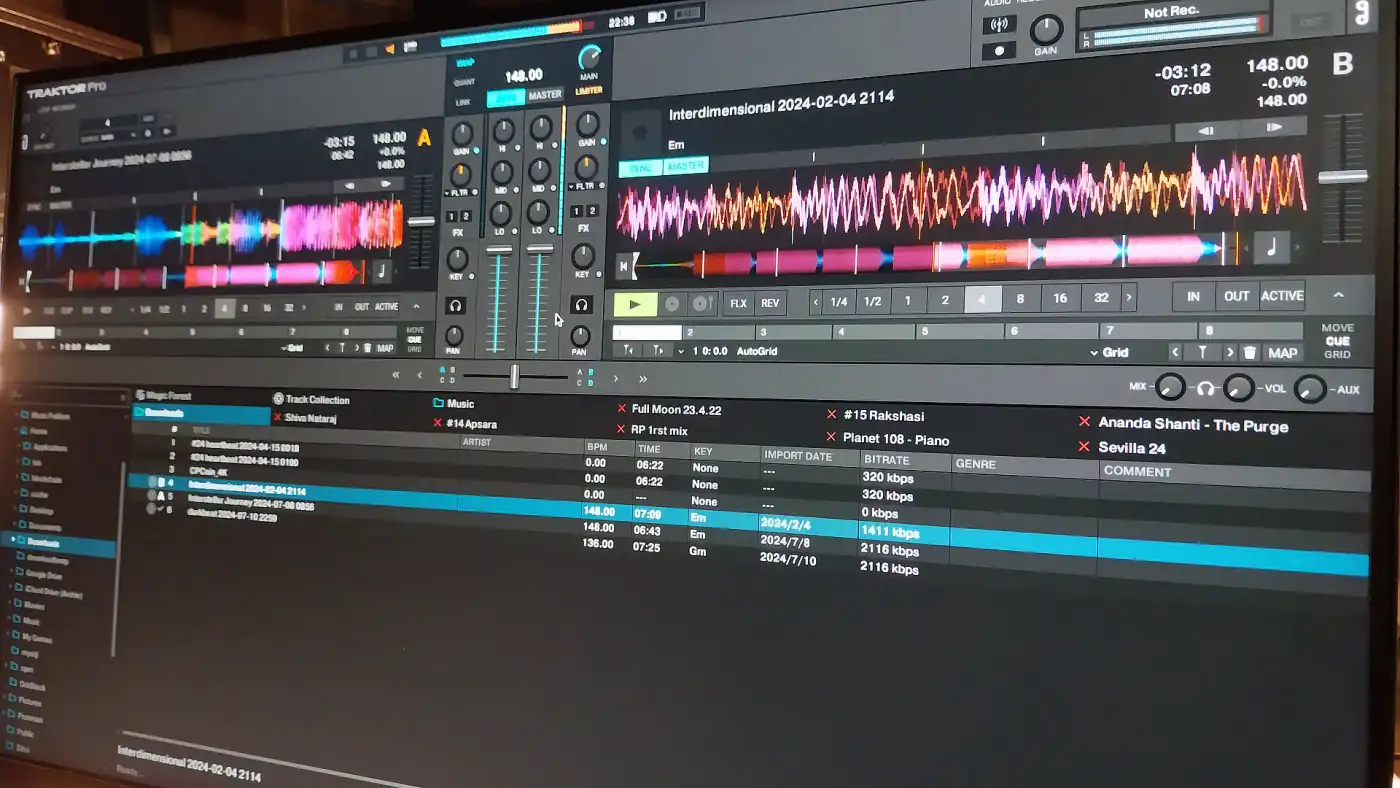
Traktor DJ software: a technical look
Decks and stem modes, sync and beatgrid, effects, loops, DVS and MIDI mapping: what Native Instruments’ Traktor can do and how its main features work.
L-Acoustics, d&b audiotechnik, Funktion-One, Meyer Sound and JBL: what each festival sound system brand stands for, what psytrance festivals use, and what makes a rig sound good.
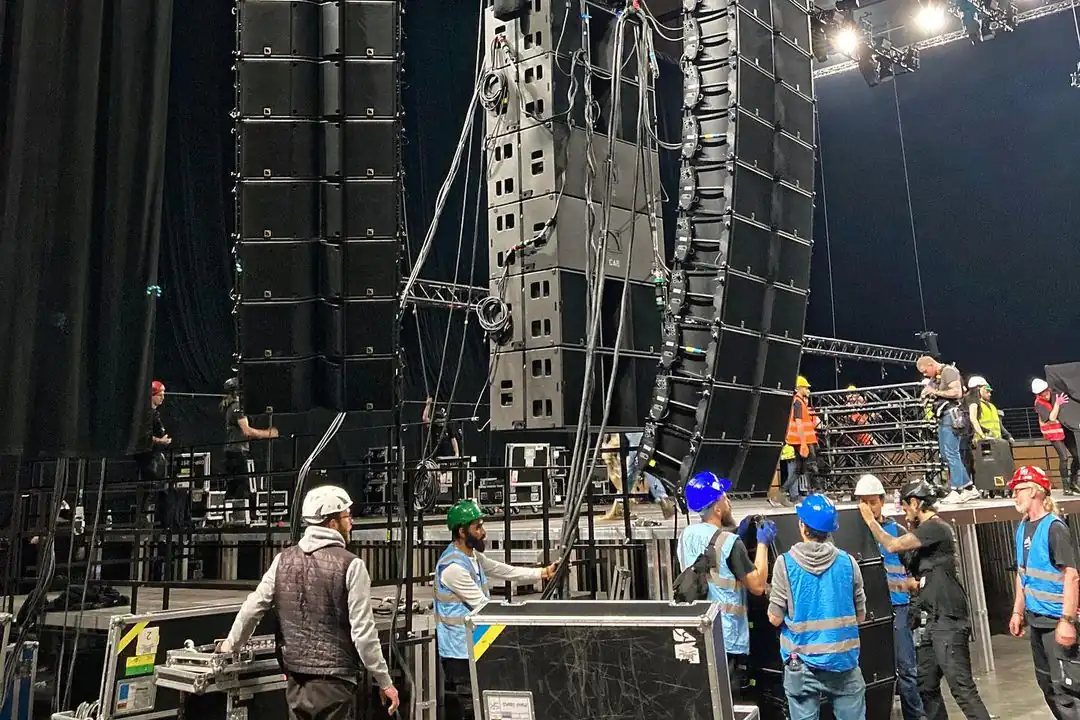
The best sound systems for festivals in 2026 come from a small group of professional brands: L-Acoustics, d&b audiotechnik, Funktion-One, Meyer Sound and JBL. You will find one of them on almost every big stage. Which one is "best" depends on the site, the budget and above all the crew that designs and tunes the rig.
At psytrance festivals, two names come up in published reports. Funktion-One supplied both stages at Burning Mountain in Switzerland, and d&b audiotechnik ran five stages at Boom in Portugal. Below we go through what makes a good festival sound system, then each brand's character, and what we could confirm about the rigs at psytrance festivals.
A good rig is less about the logo and more about four things working together. Psytrance makes this harder than most genres: the kick and the rolling bass sit close together in the low end, and if the system smears them, the groove is gone.
The sound should be close to the same at the front, in the middle and at the back of the dance floor, without a painful zone near the speakers. Large stages usually use line arrays: tall, curved hangs of speakers that throw sound evenly over a long distance. Some brands prefer point-source designs, which many people describe as more direct and punchy. Both work when the system is designed for the site.
Subwoofers carry the kick and bass. Good systems arrange them so the bass stays on the dance floor and does not pour backwards onto the stage or into the campsite. Cardioid sub arrays, which cancel bass behind the speakers, are now common for exactly that reason. For psytrance, the low end needs to be tight and fast, so every bass note stays separate from the kick.
On a big dance floor, the sound at the back gets weaker. Instead of turning the main system up until the front row suffers, crews put extra speakers on towers further back. These are electronically delayed so their sound arrives at the same moment as the sound from the stage. Done well, you get clean, even volume across the whole floor at lower overall levels.
Almost every festival works under noise limits set by local authorities, usually measured at the mixing desk and at the edge of the site. Neighbours, nature reserves and other stages all count. Good system design keeps the sound where it belongs. At Boom, the d&b team used prediction software to keep the big stages from bleeding into each other and reported a level drop of about 20 dB outside the main tent.
The same speakers can sound great or awful depending on placement, tuning and the engineer at the desk. A well-tuned mid-range system beats a badly set-up top brand every time.
L-Acoustics was founded in 1984 by the physicist Christian Heil and is based in Marcoussis, south of Paris. In 1992 it introduced V-DOSC, a line source array based on its Wavefront Sculpture Technology, and that idea shaped how big stages have sounded ever since. If you have seen long, banana-shaped black hangs above a festival stage, there is a good chance they were L-Acoustics.
Its K1 system, launched in 2008, was designed mainly for large festivals and stadiums. K2 and Kara followed for mid-size and smaller stages. The newer L Series arrived in 2023, and in 2026 the company added the L1 line source and the CS1 cardioid subwoofer. L-Acoustics also runs L-ISA, its immersive sound technology for live shows. Character: very even coverage and a clean, controlled sound over long distances.
d&b audiotechnik was founded in 1981 by Jürgen Daubert and Rolf Belz and is based in Backnang, near Stuttgart, Germany. It introduced its Cardioid Subwoofer Array in 2004 and the J-Series line array in 2006, followed by the Soundscape immersive system in 2017 and the GSL line array in 2018. Character: precise, controlled, and strong on keeping sound inside the area where it is wanted.
That control is why it fits a festival like Boom. According to a case study published by d&b, five of Boom's stages used its systems, including the Dance Temple and the Alchemy Circle, with J-Series main hangs and cardioid J-SUB and SL-GSUB subwoofers. The engineers used d&b's ArrayCalc and NoizCalc software to plan coverage and keep the stages from interfering with each other.
Funktion-One was founded in 1992 by Tony Andrews and John Newsham, who had started the loudspeaker company Turbosound in 1978. It is based in Dorking, Surrey, in England. Its current ranges include Vero and Vero VX for large stages, Evolution, a point-source range, and the Dance Stack, which is installed at Berghain in Berlin. In Brazil, D-Edge in São Paulo is among the clubs listed with Funktion-One systems.
Character: direct, punchy and physical, with a midrange you feel in your chest and a reputation for clarity at high levels. That makes it a favourite with many dance music crowds. At Burning Mountain in 2022, Funktion-One supplied both stages: a Vero VX system on the main stage, with two hangs of six VX90 cabinets and twelve V124 bass enclosures, and an Evolution system on the second stage. Our festival page also lists Funktion-One as the festival's sound system.
Meyer Sound was founded in 1979 by John and Helen Meyer in Berkeley, California. The Grateful Dead were a long-time client. The company is known for self-powered loudspeakers, with the amplifier built into the cabinet, and for the LEO family of large line arrays.
Its PANTHER line array has a built-in Class D amplifier and is aimed at touring, festivals, arenas and theatres; Ed Sheeran's in-the-round stadium tour was built around it. Meyer also makes Constellation, an electroacoustic system that changes the acoustics of a room. Character: neutral, accurate and detailed, which suits dense electronic music when it is tuned well.
JBL was founded in 1946 by James Bullough Lansing and is part of Harman, which is owned by Samsung. Most people know JBL from consumer speakers, but its professional side has a long festival history: JBL components were part of Bill Hanley's sound system at Woodstock in 1969.
Today its touring flagship is the VTX line. The VTX A12 is a dual 12-inch line array with 90-degree horizontal coverage, built for mid- to large-size touring and high-end installations, and it pairs with the VTX B28 subwoofer. Character: powerful and widely available through rental companies, which makes it a common sight at large events of all genres.
Festivals rarely publish their full technical rider, so we only list what we could confirm in published reports or our own festival records.
If you produce music, it helps to know what these systems do to your low end. Our guides to frequency in psytrance and building a rolling bassline explain why kick and bass need space to work on a big rig.
There is no single winner. L-Acoustics, d&b audiotechnik, Funktion-One, Meyer Sound and JBL all run major festival stages. The best choice depends on the site, the noise limits, the budget and the crew. A well-designed and well-tuned rig matters more than the brand.
From what we could confirm: Funktion-One at Burning Mountain, d&b audiotechnik at Boom, Martin Audio on Ozora's main stage in 2018 and Clear Sound at VooV. Many smaller festivals rent from local companies, so the brand can change from year to year.
Line arrays spread sound evenly over long distances and suit big, deep dance floors. Point-source systems are often described as more direct and punchy and work well for smaller and mid-size floors. Both can sound excellent when designed for the space.
Extra speakers on towers further back on the dance floor. Their signal is delayed so it arrives in time with the sound from the stage. They let the back of the crowd hear clearly without the front being blasted.
Local authorities set noise limits to protect neighbours and nature, and festivals also need to protect their own crowd's hearing. Good system design, cardioid subs and delay towers help festivals sound full while staying within those limits. Bring earplugs anyway.
Decks and stem modes, sync and beatgrid, effects, loops, DVS and MIDI mapping: what Native Instruments’ Traktor can do and how its main features work.
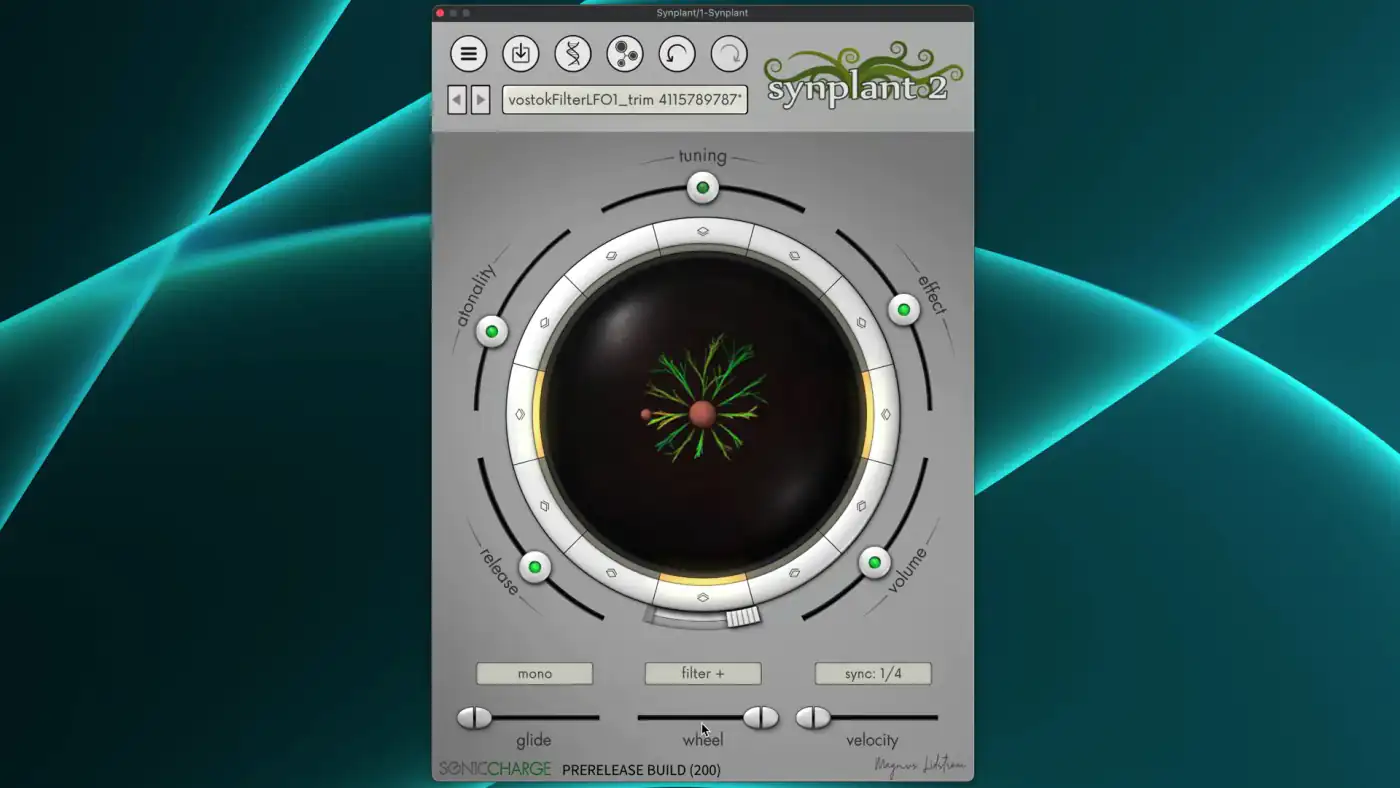
Synplant 2 uses AI to turn recordings into synth patches and lets you grow new sounds from seeds. How it works, what's included and how easy it is to use.
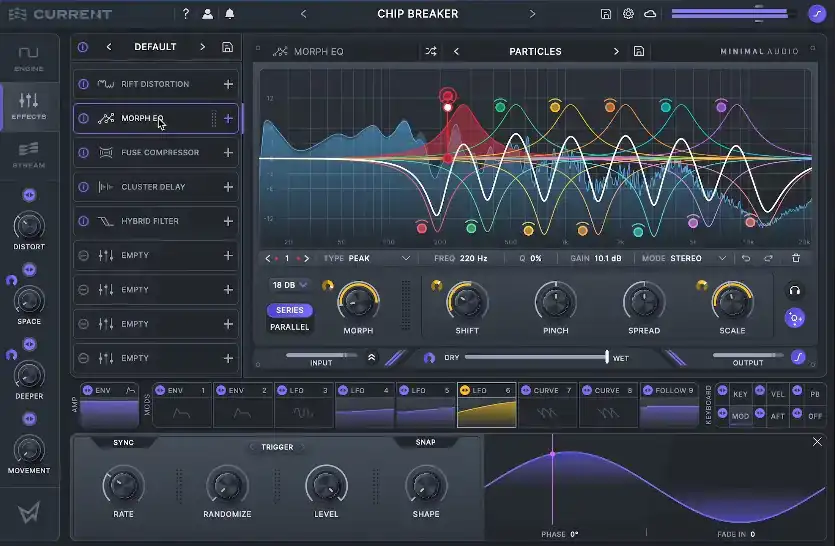
Spectral and granular engines, a sampler, a nine-slot effect rack and the Stream cloud library: what Minimal Audio's first synth Current offers psytrance producers.