What a synth has to do in psytrance
The bass carries the track: one short, punchy note between the kicks, repeated for minutes, every hit the same. That needs a mono patch, a fast filter envelope and a clean low end. Our guide to the perfect psytrance bassline goes through it step by step.
On top come acid lines (resonant low-pass filter, snappy envelope, glide), leads that cut through, and FX like zaps, risers and sweeps. Flexible modulation matters more than the number of oscillators. New to this? Read our introduction to synths in psytrance.
The best synths for psytrance
Serum 2 (Xfer Records)
The second version of Xfer Records' wavetable synth adds multisample, sample, granular and spectral oscillator types, dual warps, an arpeggiator and a clip sequencer, plus more than 626 presets. It covers everything in psytrance: tight basses from a plain saw, warped leads, zaps from fast pitch and warp modulation. The third-party preset market is big, psytrance packs included, and Serum 1 owners upgrade for free.
Learning curve: medium. Platforms: Windows and macOS, VST3, AU, AAX. Price: paid, $249 on the Serum 2 page at Xfer Records as of October 2026, with a 15-minute demo.
Vital (Matt Tytel)
Vital is a spectral warping wavetable synth by Matt Tytel. The free Basic version is the full synth with 75 presets and 25 wavetables; paid tiers and a subscription add sounds and extras. Every modulation is animated on screen, which makes it one of the easiest synths to learn on. Rolling basses, driven acid lines and sweeping leads are all within reach, and psytrance preset packs exist for it. Details in our Vital review.
Learning curve: easy to medium. Platforms: Windows, macOS, Linux. Price: free, optional paid tiers at vital.audio.
Spire (Reveal Sound)
Spire is a polyphonic synth whose four oscillators switch between modes such as Classic, FM, HardFM, SawPWM and Vowel, so it sits between virtual analog and FM. It is strong at big, wide leads and bright, hard basses, and the FM modes give metallic, squelchy tones for full-on and darker styles. Trance sound designers have built plenty of soundsets for it. See our Spire review.
Learning curve: easy to medium. Platforms: Windows and macOS, VST, AU (Mac), AAX. Price: paid. Spire at Plugin Boutique.
Sylenth1 (LennarDigital)
Sylenth1 is a virtual analog synth with four alias-free unison oscillators of up to eight voices each, all on one screen. It is a workhorse for clean basses, plucks and classic trance leads. Modulation is limited compared with newer wavetable synths, but you get a usable bass in minutes, and psytrance preset banks are still made for it.
Learning curve: easy. Platforms: Windows and macOS (native on Apple silicon), VST3, AU, AAX. Price: paid, sold by the developer: Sylenth1 at LennarDigital.
Phase Plant (Kilohearts)
Phase Plant is a semi-modular synth. You combine as many generators as you need (waveforms, wavetables, samples, noise), cross-modulate them at audio rate and run the result through three effect lanes of Kilohearts Snapins. That suits psytrance FX, metallic FM squelches and basses with separate sub and top layers in one patch. You build the signal flow yourself, so it takes longer to learn.
Learning curve: medium to steep. Platforms: Windows and macOS, VST2, VST3, AU, AAX. Price: paid ($199 on the Kilohearts site as of October 2026) or via the subscribe-to-own Kilohearts subscription, with a 10-day trial. Phase Plant at Plugin Boutique.
Pigments 7 (Arturia)
Pigments 7 combines modal, granular, wavetable, sample, harmonic and virtual analog engines with drag-and-drop modulation, a generative sequencer that can also arpeggiate, and more than 1,700 presets. The sequencer is handy for acid lines, arps and stepped filter movement; the granular and modal engines add textures and odd percussive FX. Pigments Play is a free, limited version.
Learning curve: medium. Platforms: Windows 10+ (no ARM) and macOS 11+, standalone, VST, AU, AAX, NKS. Price: paid ($199 on the Arturia site as of October 2026). Pigments 7 at Plugin Boutique.
Massive X (Native Instruments)
Massive X is a polyphonic wavetable synth with more than 170 wavetables, ten oscillator reading modes, free any-to-any routing and 16 macros. Its deep, gritty tones and expressive modulation work well for dark basses and moving leads in darker psytrance. On Intel computers it needs a processor with AVX.
Learning curve: medium. Platforms: Windows 10/11 and macOS 13 to 15 including Apple silicon, VST, VST3, AU, AAX. Price: paid ($199 on the Native Instruments site as of October 2026). Massive X at Plugin Boutique.
Diva (u-he)
Diva is a virtual analog synth with real-time circuit modelling. You mix models of classic oscillators, filters (including a ladder filter) and envelopes. It is the pick for warm acid lines, Goa-style leads and round basses. The catch is CPU, which u-he itself calls high: use the lighter Dual VCO Eco oscillator, freeze tracks or render to audio.
Learning curve: easy to medium. Platforms: Windows, macOS and Linux (beta), VST3, AU, AAX, CLAP. Price: paid (179 euros on the u-he site as of October 2026). Diva at Plugin Boutique.
Synplant 2 (Sonic Charge)
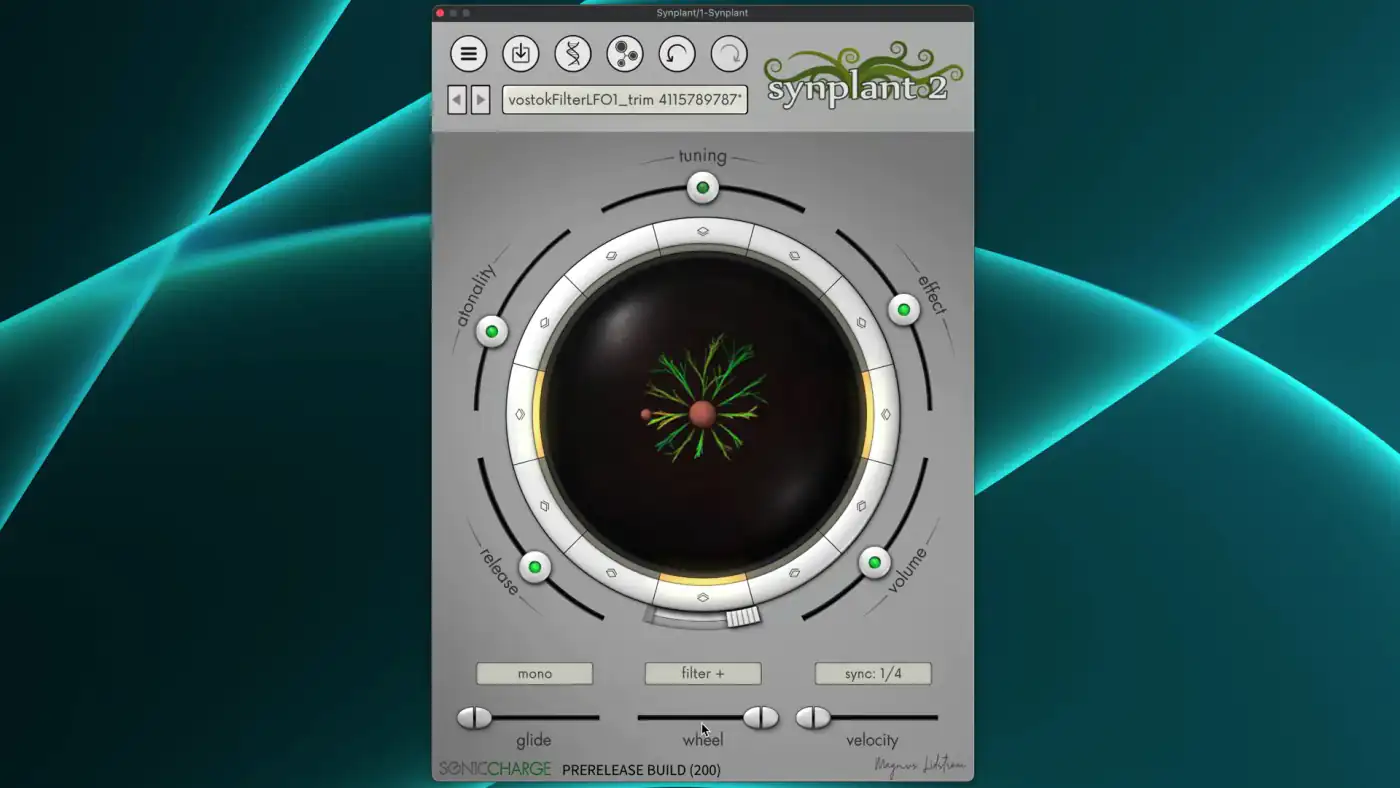
Synplant 2 grows sounds from seeds that you pick by ear, and its Genopatch feature uses machine learning to build a patch that imitates a sample you load, all on your own computer. It is no bass workhorse. Feed it a vocal, a field recording or a percussion hit and turn the result into organic FX, textures or odd leads. Our Synplant 2 review shows how.
Learning curve: easy to start, harder to steer. Platforms: macOS (standalone, VST 2.4, VST3, AU) and Windows (VST 2.4, VST3). Price: paid ($149 as of October 2026), three-week trial, sold by the developer: Synplant 2 at Sonic Charge.
Psytrance synths compared
| Synth | Type | Best for | Free/paid | Platforms |
|---|
| Serum 2 | Wavetable plus sample, granular, spectral | All-round: bass, leads, FX | Paid | Windows, macOS |
| Vital | Spectral warping wavetable | Learning, basses, leads | Free (paid extras) | Windows, macOS, Linux |
| Spire | Virtual analog with FM modes | Wide leads, bright basses | Paid | Windows, macOS |
| Sylenth1 | Virtual analog | Clean basses, classic leads | Paid | Windows, macOS |
| Phase Plant | Semi-modular (wavetable, sample, FM) | FX, complex leads | Paid or subscription | Windows, macOS |
| Pigments 7 | Multi-engine hybrid | Sequenced lines, textures | Paid (free Play version) | Windows, macOS |
| Massive X | Wavetable | Dark basses, moving leads | Paid | Windows, macOS |
| Diva | Virtual analog, circuit modelling | Acid lines, warm leads | Paid | Windows, macOS, Linux (beta) |
| Synplant 2 | Genetic synthesis with AI sound matching | Organic FX, textures | Paid | Windows, macOS |
How to choose a synth for psytrance
- Budget: start with Vital or Pigments Play and pay only when you hit a real limit. One synth you know well beats five you scroll through.
- CPU: a psytrance project easily has a dozen synth tracks. Circuit-modelled synths like Diva need far more power than Sylenth1 or Vital, so freeze finished parts.
- Workflow: visual wavetable synths (Vital, Serum 2) show you what happens, one-screen synths (Sylenth1, Spire) are fast, modular ones (Phase Plant) reward patience.
- Presets: Serum, Vital, Sylenth1 and Spire have large third-party libraries. Taking presets apart is a great way to learn, as our guide to crafting psytrance leads shows.
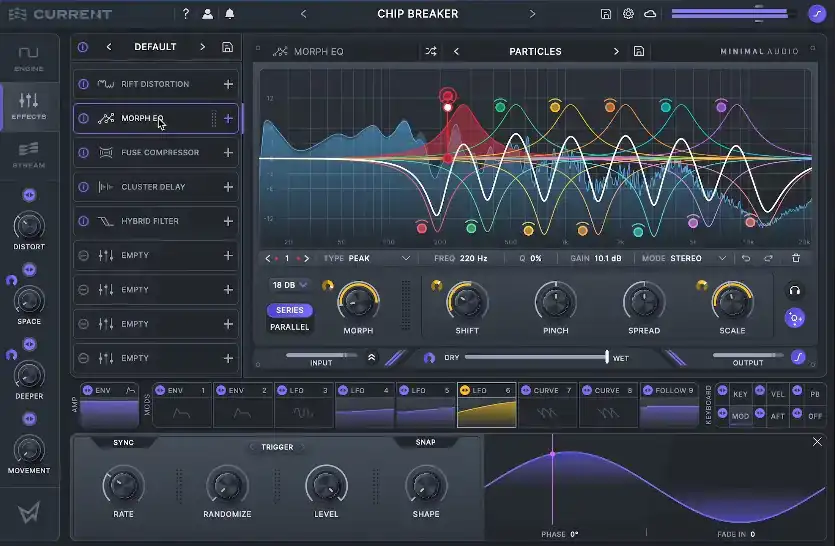
Into spectral and granular sources? Look at Minimal Audio's Current. For the effects after the synth, see plugins that enhance psytrance production.
Start free with Vital
You can learn psytrance sound design without spending money. Download Vital, open an init patch and build a rolling bass:
- Use one saw oscillator and set the synth to mono.
- Add a low-pass filter and drag an envelope onto the cutoff, with fast attack and short decay.
- Keep the amp envelope short so each note ends before the next kick.
- Program one note on each 16th between the kicks and adjust the decay until it rolls.
Then turn the same patch into a lead: more voices, unison, longer release, some delay. Once you can do both from scratch, you know what to look for in a paid synth.
Black Friday tip for synth plugins
Plugin stores and developers run big sales around Black Friday, which falls on 27 November 2026. Make your shortlist now so you do not buy on impulse.
- Try demos and trials first: Serum 2, Phase Plant, Diva and Synplant 2 all have one.
- Check system requirements: Massive X needs AVX on Intel, Pigments does not run on Windows ARM, and only Vital and Diva list Linux.
- Decide between owning and paying monthly, then compare store prices with the developer's own offer.
FAQ
What synth do psytrance producers use?
There is no single standard. Serum, Sylenth1, Spire and Vital all have dedicated psytrance or trance preset packs, so they are a safe place to start. How well you know your synth matters more than which one it is.
Is Vital good enough for psytrance?
Yes. The free version has the full sound engine, so it can make professional basses, leads and FX. Paid tiers only add presets, wavetables and extras.
Serum or Vital for psytrance?
Both are wavetable synths with a similar visual workflow. Serum 2 adds sample, granular and spectral oscillators, a clip sequencer and a larger preset market. Start with Vital and buy Serum 2 when you need those extras.
Do I need hardware synths?
No. You can produce complete psytrance tracks with soft synths alone. Hardware is a matter of workflow and taste, and easier to choose once you have learned synthesis in software.