
Music Production
Odd time signatures in psytrance: how to use them
Psytrance runs on 4/4, but odd meters can add tension: how to layer odd patterns over a straight kick, vary rhythms and place odd-meter sections in a track.
Cutoff, resonance and slope explained, plus how to use the low-pass filter on basses, leads and pads, for movement, in the mix and across a whole track.
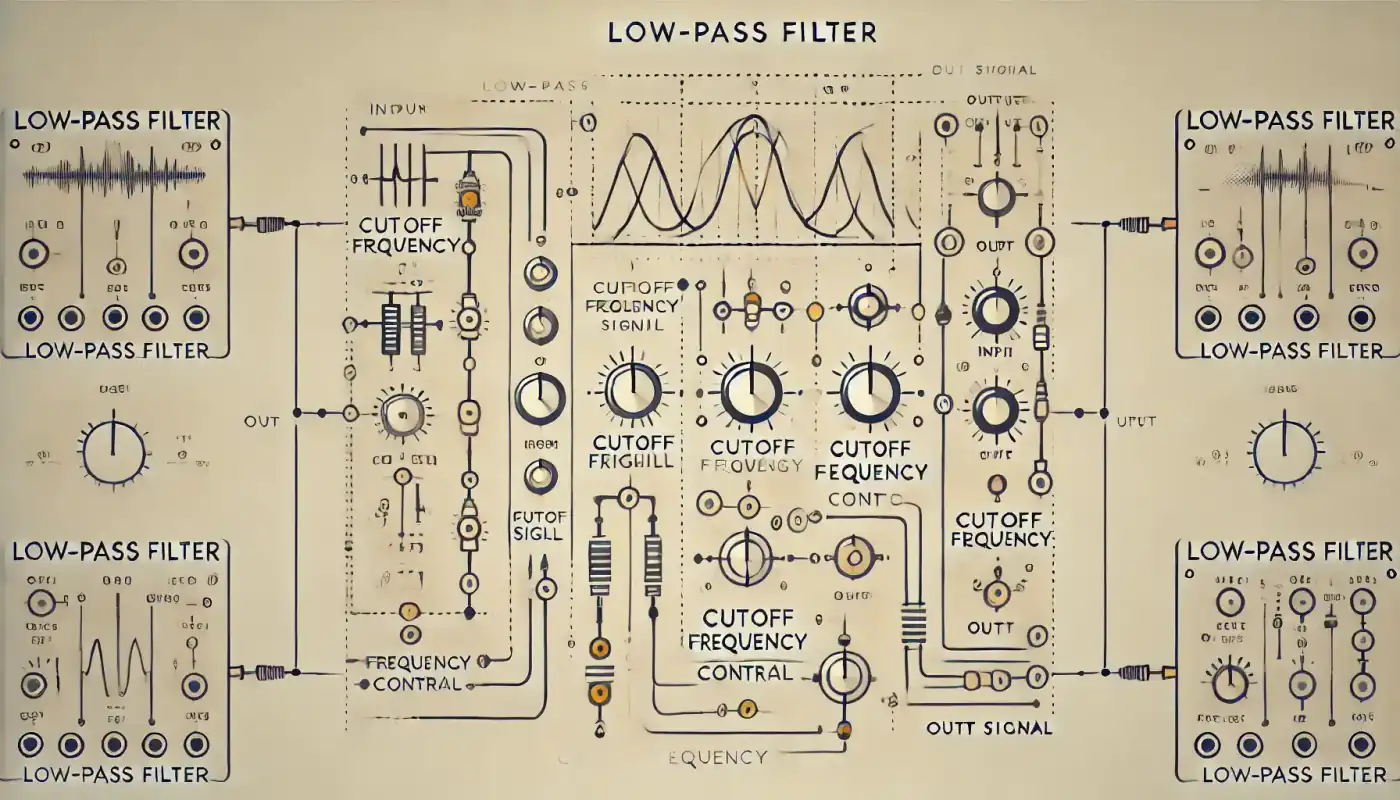
Few tools shape the psytrance sound as much as the low-pass filter. It sculpts the bass, makes leads and pads move, keeps the mix clean and drives builds and drops. Here is how it works and how to use it in a track.
A low-pass filter (LPF) lets frequencies below a set point pass and turns down everything above it. Three controls define it:
Psytrance basses are usually built with subtractive synthesis: start with a harmonically rich waveform such as a saw and use the low-pass filter to sculpt it. Set the cutoff and resonance so the bass stays tight and punchy and doesn't clash with the other elements. A filter envelope with a short decay gives every note a short, plucky bite. If you layer several bass sounds, each one can have its own filter settings.
On leads, a snappy filter envelope adds definition and energy. On pads, a slowly moving cutoff creates evolving textures. Resonance highlights certain harmonics and gives a sound its own character, but go carefully: high resonance can get harsh quickly.
A sound with a static filter quickly gets boring. Link the cutoff to an LFO for periodic, rhythmic modulation, synced to the tempo if you want it to lock with the groove. Try different waveforms (sine, square, triangle) and rates. An envelope follower takes another route: it moves the cutoff according to the level of the incoming signal, so the filter reacts to the sound itself.
Automation does the long-term work. Sweeping the cutoff up or down over several bars is one of the most common moves in psytrance and builds and releases tension. On the bassline, small, subtle cutoff changes keep the pattern alive without breaking the flow.
Low-pass filters also help in the mix. Removing unneeded highs from some elements reduces clutter and gives each sound its own space. A slightly filtered bass leaves room at the top for the leads. Filtering the tails of reverbs and delays makes them sit further back and creates a sense of depth without adding hiss and harshness.
Here is how a low-pass filter can shape a whole psytrance track:
As with any tool, use the filter with purpose. Every sweep and every envelope should serve the track, not just show that something is moving.
Psytrance runs on 4/4, but odd meters can add tension: how to layer odd patterns over a straight kick, vary rhythms and place odd-meter sections in a track.

What producers can take home from a psytrance festival: crowd reactions, a wide range of styles, useful contacts, lessons from established artists and hands-on workshops.

Stuck in an empty project? Field recordings, other genres, your own tools, collaborations and the dance floor are all good places to find new ideas.